


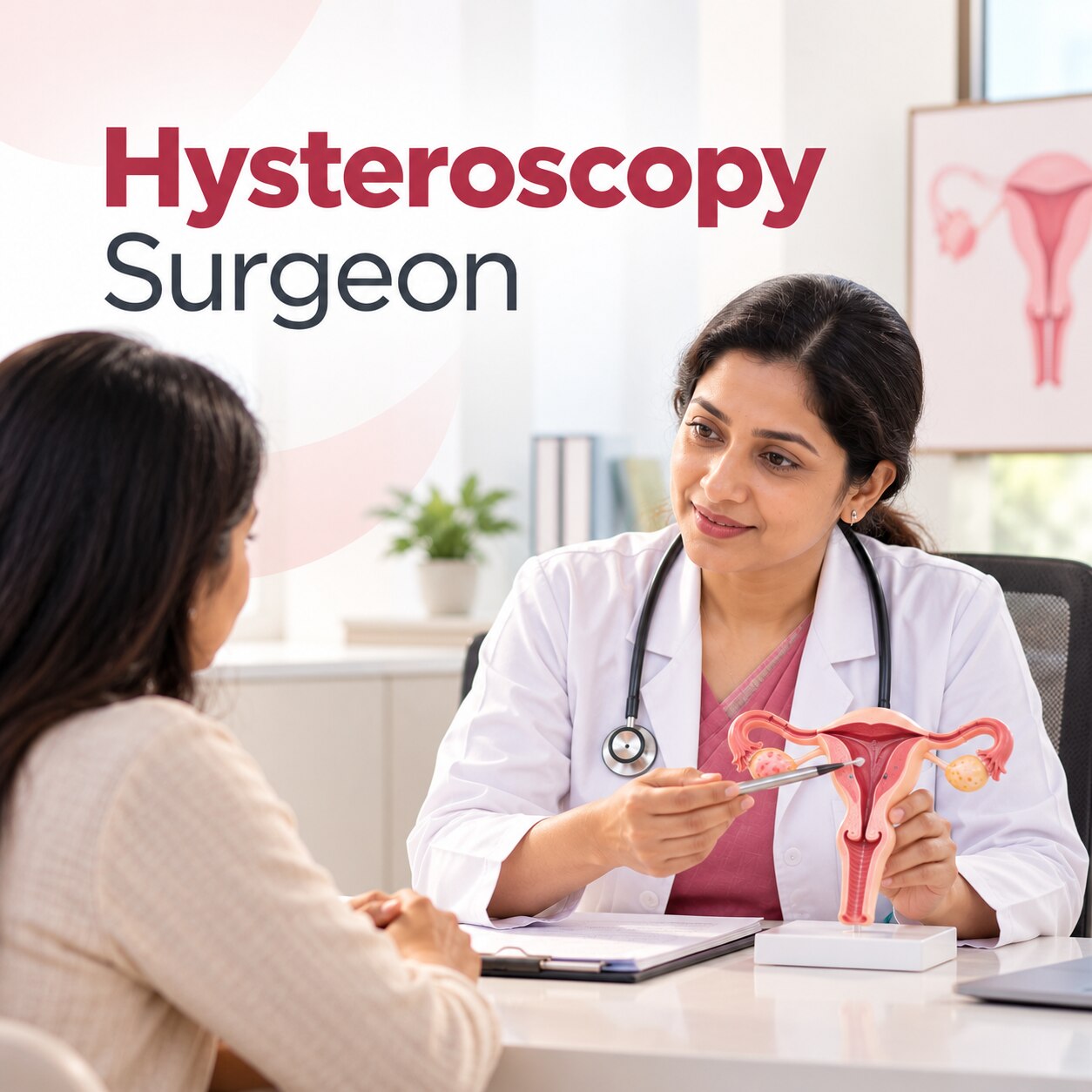
You may know that a hysteroscope examines the uterus, but still wonder what happens from check-in to discharge, what you will feel, and whether treatment can happen immediately. By the end, you will know how to prepare, what questions to ask, and which findings require a different test or a second procedure.
Key takeaways
- Bring your scans, medication list and consent questions to the pre-procedure visit.
- A thin camera enters through the cervix to inspect the uterine cavity.
- Polyps, small fibroids and adhesions can sometimes be treated during the same session.
- Ask about anaesthesia, recovery time, pathology testing and warning signs before discharge.
Why You Are Referred and How to Prepare Before Arrival
A hysteroscopy procedure in Andheri West is recommended to inspect the uterine cavity when abnormal uterine bleeding, a suspected endometrial polyp, submucosal fibroid or an unusual ultrasound finding needs clarification. Other reasons include intrauterine adhesions, retained tissue or an intrauterine device, infertility-related cavity findings, and recurrent miscarriage.
Office procedure | Operating-theatre appointment Location | Clinic or procedure room | Hospital theatre Fasting | Often unnecessary if no sedation is planned | Required when sedation or general anaesthesia is planned; follow written facility instructions Monitoring and recovery | Brief observation, with discharge soon after | Anaesthesia monitoring and longer recovery Escort home | Usually not needed without sedation | Required after sedation or general anaesthesia; follow driving restrictions
Before arrival, give the clinician this information:
- Possible pregnancy, active pelvic infection or severe unexplained bleeding
- Anticoagulant or antiplatelet medicines, drug allergies and other regular medicines
- Previous cervical or uterine surgery, difficult cervical procedures or anaesthetic problems
- Ultrasound, saline scan, MRI or other relevant reports
Pregnancy exclusion is required when appropriate because routine hysteroscopy is not performed during pregnancy. The clinician may choose the early part of your menstrual cycle, after bleeding ends, to improve visibility; follow the appointment timing provided. Treat an active pelvic infection before an elective examination.
Fasting rules for sedation or general anaesthesia come from the facility, and its written instructions override general advice.
The Hysteroscopy: A Chronological Walkthrough from Consent to Inspection
The camera view is only one part of the appointment. What happens during hysteroscopy in Andheri usually follows this sequence:
1. You register at the clinic or hospital, complete a medical review, and confirm the planned procedure. The clinician explains diagnostic hysteroscopy, biopsy or operative treatment, answers questions, and obtains consent.
2. You change into a gown and lie in the examination position. The team confirms medicines, allergies, pregnancy status when appropriate, and the planned anaesthesia or sedation.
3. A speculum gently separates the vaginal walls so the clinician can see the cervix. The narrow hysteroscope then passes through the vagina and cervix into the uterus; no abdominal incision is needed. If the cervix is tight, the clinician may use preparation or gentle dilation, but dilation is not routine for every patient.
4. Sterile fluid, usually normal saline, gently expands the uterine cavity. The surgeon views the endometrium, uterine walls and openings of the fallopian tubes on a monitor during this uterine camera procedure in Andheri.
5. The inspection checks for polyps, submucosal fibroids, scar tissue, retained tissue, a uterine septum or an unusual lining. A biopsy or treatment may follow when it was planned and safe to perform during the same session.
6. The instruments are removed, and you remain under observation in recovery. The team reviews bleeding, pain control, results, discharge instructions and whether you need an escort.
Camera time is not total visit time: consent, preparation, anaesthesia, positioning and recovery add to the appointment.
When Diagnosis Becomes Treatment in the Same Session
A diagnostic hysteroscopy inspects the uterine cavity and may include a small, directed biopsy. An operative hysteroscopy adds instruments passed through the hysteroscope, allowing the surgeon to treat a finding during the same sitting.
| Option | What happens | Typical purpose |
|---|---|---|
| Diagnostic hysteroscopy | Camera inspection, with directed sampling when needed | Identify a polyp, scar, retained tissue or abnormal lining |
| Operative hysteroscopy | Instruments remove, cut or treat tissue through the scope | Remove a polyp, treat a selected submucosal fibroid, divide adhesions or incise a uterine septum |
Same-session treatment requires suitable equipment, clear consent, safe cervical access and enough fluid-safety margin. A surgeon may stop and schedule another procedure if the finding is extensive, the required instrument is unavailable, the fluid deficit reaches its safety limit, cervical access is difficult, or tissue diagnosis must come before treatment.
For gynec hysteroscopy in Mumbai, ask whether the booking is diagnostic, operative or hysteroscopy with biopsy. A visible lesion is not automatically cancer: removed tissue goes to histopathology, and its appearance on the monitor is not a final diagnosis. Postmenopausal bleeding or other cancer-risk features may require directed endometrial sampling.
The pathology report determines whether you need surveillance, further treatment or another procedure.
Anaesthesia, Sensations, Monitoring and the First Few Days Afterwards
Office hysteroscopy can involve pressure, cervical discomfort and period-like cramping, even without anaesthesia. The choice depends on cervical access, pain history, medical conditions, patient preference and whether treatment is planned.
| Option | What you may experience | Where it fits |
|---|---|---|
| Office without anaesthesia | Pressure, cervical discomfort and cramping while you remain awake | Short diagnostic examination |
| Local anaesthetic | Numbing around the cervix; pressure or cramping can still occur | Diagnostic work or limited treatment |
| Sedation | Drowsiness, relaxation and limited memory; you may still respond | Anxiety, discomfort or a longer procedure |
| Regional anaesthesia | Numbness in the lower body while you remain awake or lightly sedated | Selected operative cases |
| General anaesthesia | No awareness while it is active, followed by monitored recovery | Longer or more complex operative hysteroscopy |
Operative hysteroscopy often needs stronger or longer anaesthesia because instruments, biopsy or treatment remain in place for longer. Staff monitor your pulse, blood pressure and oxygen throughout. They also record distension-fluid input and output; if the fluid deficit reaches the safety limit, they stop the procedure.
Risks include cramping, bleeding, infection, vasovagal symptoms, cervical injury, uterine perforation and fluid-related electrolyte disturbance. For several days afterwards, mild cramps, light bleeding or watery discharge can occur. Seek urgent medical advice for heavy bleeding, worsening pain, fever, fainting or foul-smelling discharge.
Arrange an escort after sedation or general anaesthesia, and follow the facility’s driving restriction; do not drive until cleared.
What Hysteroscopy Can Confirm—and How to Choose the Right Andheri Team
Hysteroscopy is the right test when the question concerns the inside of the uterine cavity: the endometrium, cavity walls, polyps, adhesions, retained tissue or a submucosal fibroid. It does not assess ovarian disease, most outer-wall fibroids, endometriosis or fallopian-tube blockage.
| Test | What it shows | When it helps |
|---|---|---|
| Pelvic ultrasound | Uterus, ovaries and surrounding pelvis | Broad first assessment |
| Saline infusion sonography | Cavity outline after saline enters the uterus | Suspected polyp or cavity lesion |
| Hysteroscopy | Direct view inside the cavity, with targeted biopsy or treatment | Confirming and sometimes treating an intracavitary finding |
| Laparoscopy | Outside of the uterus, ovaries, endometriosis and tubes | Pelvic pain, endometriosis or tubal assessment |
When searching for a hysteroscopy surgeon near me, ask these questions before booking:
- Is this diagnostic hysteroscopy, operative hysteroscopy or hysteroscopy with biopsy?
- What anaesthesia is planned, and will an anaesthetist be present?
- Does the facility provide emergency support and monitor distension-fluid input and output?
- If tissue is removed, which laboratory performs histopathology, and how will the report reach me?
- If treatment cannot be completed in one session because of access, equipment, the finding’s extent or a fluid-safety limit, what is the next step and cost?
Someone considering Dr Neha Pawar Obstetrician,Gynecologist,Andheri can use these questions when discussing the proposed procedure at Kokilaben Dhirubhai Ambani Hospital, instead of choosing on “uterine camera procedure” alone.
Related service
Gynaec Hysteroscopy Surgeon in Andheri West Gynaec Hysteroscopy Surgeon in Andheri West,Mumbai Dr Neha Pawar is the Best Gynaec Hysteroscopy Surgeon in Andheri West, Andheri and Mumbai. View service → |
Frequently asked questions
Why might a doctor recommend hysteroscopy?
Doctors use hysteroscopy to investigate abnormal bleeding, suspected polyps or submucosal fibroids, unusual ultrasound findings, adhesions, retained tissue, an intrauterine device, infertility-related findings and recurrent miscarriage.
What happens during hysteroscopy?
After consent and preparation, the team monitors you while a thin camera passes through the cervix to inspect the uterine cavity. The surgeon may collect tissue or treat a finding during the same session.
Can hysteroscopy treat a problem immediately?
Yes. When appropriate, the surgeon can remove an endometrial polyp, treat selected submucosal fibroids, divide adhesions or remove retained tissue during the same procedure.
What should you expect after hysteroscopy?
You may have cramping, light bleeding or watery discharge for a few days. Ask when to resume sex, exercise and work, and seek urgent advice for heavy bleeding, fever, severe pain or foul-smelling discharge.