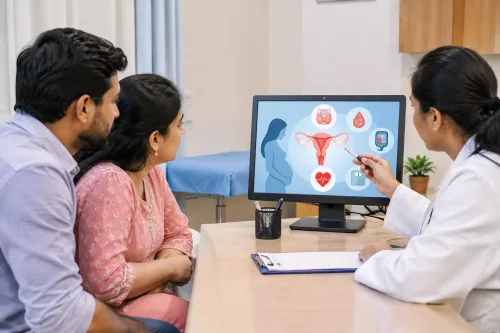


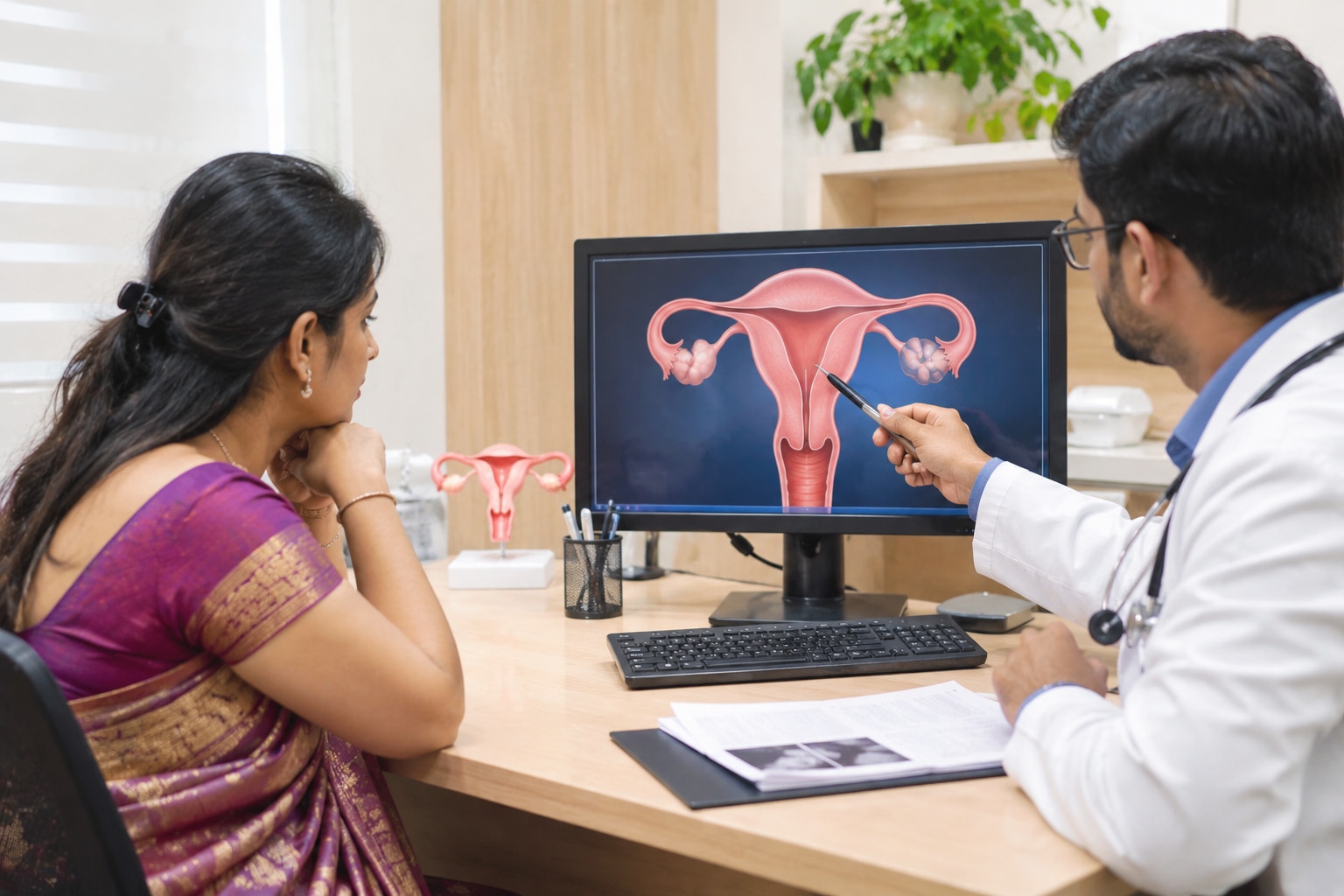
A uterine septum does not automatically mean that surgery is the right next step. By the end, you will know which reproductive histories support treatment, which scans confirm the diagnosis, when observation is safer, and what to ask before choosing a hysteroscopic surgeon in Mumbai.
Key takeaways
- Recurrent pregnancy loss is the clearest reason to discuss hysteroscopic septum incision.
- Confirm the diagnosis with three-dimensional ultrasound or MRI before surgery.
- Observation may suit people without pregnancy losses or immediate fertility plans.
- Ask about benefits, recurrence, surgical risks and the specialist’s experience.
When does a confirmed uterine septum justify surgery?
A confirmed uterine septum most clearly justifies hysteroscopic incision when it coexists with recurrent pregnancy loss. The septum is associated with miscarriage and preterm birth, but removing it does not guarantee prevention; the recommendation must match your reproductive history, pregnancy plans and preferences.
Before offering surgery, review:
- Recurrent miscarriage: Discuss hysteroscopic septum incision as a reasonable treatment option, while individualising the decision and explaining the limits of evidence.
- Infertility without recurrent miscarriage: Use shared decision-making. Surgery is not automatic, and evidence that it improves live birth remains limited and uncertain, including a randomized trial showing no live-birth improvement over expectant management.
- Previous adverse pregnancy outcomes: A prior preterm birth or another poor outcome may support a detailed discussion, but it does not by itself make surgery compulsory.
- A septum found before conception: Confirm the anatomy and discuss surgery when you are planning pregnancy, rather than treating an image alone.
- Other explanations: Assess age, ovarian reserve, sperm factors, tubal disease, prior pregnancy history and alternative causes of miscarriage separately. Treating a septum will not correct these problems.
The answer to “when is hysteroscopic septum for surgery recommended in Andheri West” is the same as elsewhere in Mumbai: neighbourhood does not create a different threshold. A septum discovered during pregnancy is not treated hysteroscopically during that pregnancy.
An incidental finding without infertility, recurrent loss or another relevant history usually calls for review rather than automatic preventive surgery.
Which tests confirm a septate uterus before an operation?
A reliable uterine septum diagnosis requires imaging that shows both the inside and outside of the uterus. Review a three-dimensional transvaginal ultrasound, with or without saline infusion sonography, before scheduling surgery.
It helps distinguish a true septum from a bicornuate uterus, which has an externally divided fundus, and from an arcuate uterus with a mild indentation.
Ask the radiologist or surgeon to document:
- Internal fundal indentation depth
- Indentation angle
- External fundal contour
- Imaging method and classification system used
Under the ASRM 2024 criteria, a septate uterus has an internal fundal indentation greater than 1 cm, an angle under 90 degrees, and a normal or nearly normal outer fundal contour. Classification systems differ, so the report should identify the criteria applied rather than state only “septum.”
| Test | What it shows | Limitation |
|---|---|---|
| Three-dimensional transvaginal ultrasound | Cavity and external fundal contour | Quality depends on image acquisition and interpretation |
| Saline infusion sonography | Cavity shape and indentation more clearly | Does not replace assessment of the outer contour |
| MRI for uterine anomaly | Detailed uterine anatomy when ultrasound remains uncertain | Usually unnecessary when high-quality 3D imaging is conclusive |
| Hysteroscopy or HSG | Cavity shape or contrast passage | Neither reliably distinguishes a septate from a bicornuate uterus alone |
Do not let one unclear two-dimensional ultrasound or HSG determine surgery. Hysteroscopy alone views the cavity, not the external fundus.
When is observation better than septum incision?
Observation is the better first step when the anatomy or the reason for operating is unclear. An arcuate uterus versus septate uterus distinction matters: an unclear scan should not lead directly to incision, especially when the finding could represent a normal variant.
Review these points before choosing surgery:
1. Repeat or clarify imaging when the diagnosis is uncertain. Three-dimensional transvaginal ultrasound, saline infusion sonography, or MRI can help distinguish a true septum from an arcuate or bicornuate uterus.
2. Choose observation when you have no reproductive symptoms and no near-term pregnancy plans. The uncertainty around septum surgery before first pregnancy means preventive treatment is not automatically justified in an asymptomatic patient.
3. Discuss expectant management when an incidental uterine septum appears during imaging or fertility assessment without recurrent miscarriage, infertility, or another adverse pregnancy outcome. Surgery is not guaranteed to improve fertility or live birth in this situation.
4. Do not treat a septum during pregnancy. A septum discovered on a pregnancy scan is reviewed after delivery, when you are not pregnant and the diagnosis, reproductive history, and future plans can be reassessed.
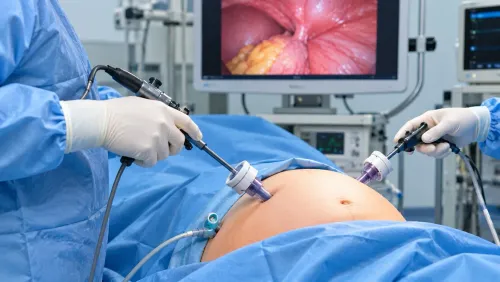
When surgery is indicated, hysteroscopic incision or resection addresses the septum facing the uterine cavity. Abdominal or laparoscopic surgery is not the usual approach for an isolated septum. A confirmed indication should be reviewed while you are not pregnant, with the decision based on anatomy, reproductive history, plans and preferences.
What benefits, limits and risks should you discuss before operating?
A uterine septum is associated with miscarriage and preterm birth, but removing it does not guarantee prevention of either outcome. Discuss hysteroscopic septum incision benefits and risks in the context of your pregnancy history, age and other possible causes of infertility or pregnancy loss.
A randomized trial found no improvement in live birth after hysteroscopic septum resection compared with expectant management for uterine septum. That result matters most when the septum is an incidental finding or infertility exists without recurrent miscarriage; surgery is not guaranteed fertility treatment.
Before consenting, ask how these operative risks will be prevented and managed:
- Uterine perforation, bleeding, infection and cervical injury.
- Intrauterine adhesions that could affect later fertility or menstruation.
- Fluid overload from the liquid used to expand the uterus.
- Whether the facility provides continuous hysteroscopy fluid deficit monitoring and what action follows an excessive fluid loss.
Afterward, treatment plans are not identical. Estrogen, an intrauterine balloon and an intrauterine device are not universally required; ask what complication each is intended to prevent and what evidence supports it. There is also no mandatory one-, two- or three-month waiting period before conception.
The timing depends on incision extent, healing appearance, symptoms, other procedures and follow-up findings. Conceive only after the surgeon confirms adequate healing and explains the plan.
How should you choose a septum surgery specialist in Andheri West?
Choose a uterine septum surgery specialist for operative hysteroscopy experience and training in congenital uterine anomalies, not because a profile simply says “fertility doctor.” A search for a septum removal doctor near me is a starting point, not proof of suitability.
Bring the original three-dimensional transvaginal ultrasound or MRI images, not only the written report. Ask how the surgeon confirmed septate rather than bicornuate anatomy, what benefit surgery offers in your history, and which alternatives remain.
Use this consultation checklist:
- Where will the procedure take place, and is it equipped for day-care hysteroscopy?
- Is fluid-deficit monitoring continuous throughout the operation?
- How would the team manage perforation, bleeding, infection, cervical injury, adhesions or fluid overload?
- What follow-up imaging will check the cavity, and when?
- Why would you recommend postoperative estrogen, a balloon or an intrauterine device, and what evidence supports it?
| Question | What a clear answer includes | Warning sign |
|---|---|---|
| Experience | Operative hysteroscopy and congenital anomaly cases | Only general fertility experience |
| Diagnosis | Review of images and explanation of the anatomy | Reliance on one unclear scan |
| Expected result | Benefit linked to your pregnancy history | Guaranteed fertility or live-birth claims |
In Andheri West, Dr Neha Pawar Obstetrician,Gynecologist,Andheri at Kokilaben Dhirubhai Ambani Hospital can review these points while you discuss hysteroscopic septum incision in mumbai. Location affects convenience and hospital access, not the medical threshold for surgery.
Related services
Hysteroscopic Septum Incision Hysteroscopic Septum Incision Specialist in Andheri West,Mumbai Dr Neha Pawar is the Best Hysteroscopic Septum Incision Specialist in Andheri West, Andheri and Mumbai. View service → |
Gynaec Hysteroscopy Surgeon in Andheri West Gynaec Hysteroscopy Surgeon in Andheri West,Mumbai Dr Neha Pawar is the Best Gynaec Hysteroscopy Surgeon in Andheri West, Andheri and Mumbai. View service → |
Frequently asked questions
When does a confirmed uterine septum justify surgery?
Hysteroscopic incision is most clearly considered when a confirmed septum coexists with recurrent pregnancy loss. Discuss the decision alongside your pregnancy plans, reproductive history and preferences.
Which tests confirm a septate uterus before an operation?
Three-dimensional transvaginal ultrasound is commonly used to define the uterine cavity and outer fundal contour. Pelvic MRI can clarify anatomy when ultrasound findings are uncertain. Hysteroscopy alone views the cavity but cannot reliably distinguish every uterine anomaly.
When is observation better than septum incision?
Observation can be reasonable when you have no recurrent pregnancy losses, no infertility concerns linked to the finding and no immediate pregnancy plans. Review the diagnosis if symptoms or reproductive goals change.
What benefits, limits and risks should you discuss before operating?
Discuss the possible reduction in miscarriage risk, the fact that surgery cannot guarantee a live birth, and risks such as bleeding, infection, uterine perforation, intrauterine adhesions and incomplete incision. Ask how recovery and future pregnancy monitoring will work.
How should you choose a septum surgery specialist in Andheri West?
Choose a specialist who regularly manages congenital uterine anomalies, confirms the diagnosis with appropriate imaging, explains alternatives and performs hysteroscopic surgery in an equipped hospital. Ask about the proposed technique, complication plan, follow-up and whether your case requires MRI or another opinion.
Related service
Fertility Enhancing Hysteroscopic Surgeries Fertility Enhancing Hysteroscopic Surgeries Specialist in Andheri West,Mumbai Dr Neha Pawar is the Best Fertility Enhancing Hysteroscopic Surgeries Specialist in Andheri West, Andheri and Mumbai. View service → |