

Fibroids do not require removal simply because they appear on an ultrasound. Treatment becomes more reasonable when bleeding, anaemia, pain, pressure, fertility problems or disruption to daily life outweigh the risks and recovery involved in surgery. By the end, you will know which symptoms need assessment, when observation remains sensible and how location, fertility plans and fibroid anatomy influence the choice of treatment.
Key takeaways
- Treat fibroids when bleeding causes anaemia, fatigue or frequent pad changes.
- Location matters: submucosal fibroids affect bleeding and fertility differently from outer-wall fibroids.
- Laparoscopy suits selected fibroids; hysteroscopy or open surgery may be safer in other cases.
- Compare observation, medicines, uterine artery embolisation and surgery with your fertility plans.
Which fibroid symptoms justify moving from observation to treatment?
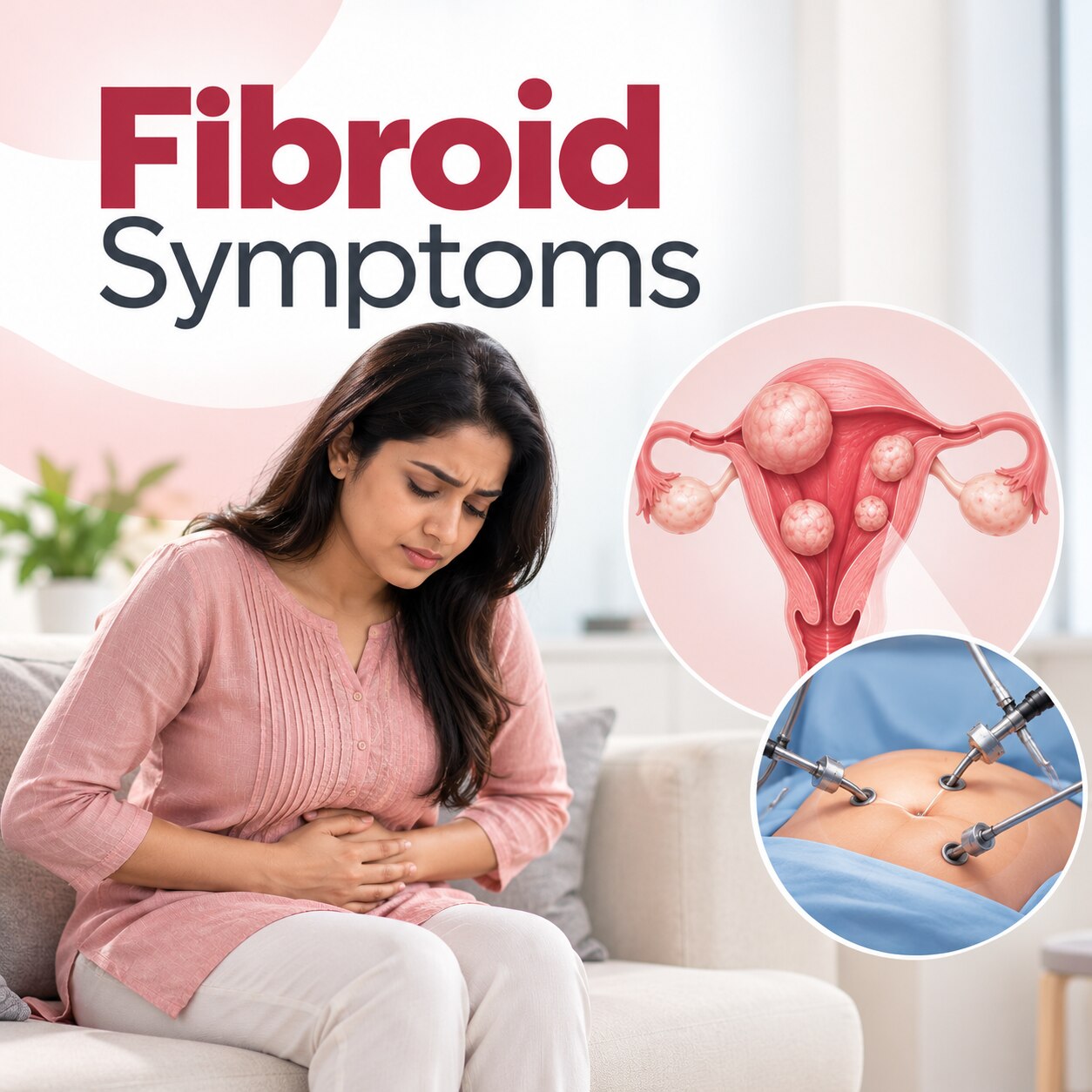
Fibroid symptoms needing surgery are defined by their consequences, not by the ultrasound finding alone. Discuss treatment when heavy or prolonged bleeding means changing pads frequently, causes iron-deficiency anaemia or fatigue, or requires repeated anaemia treatment.
Persistent pelvic pain or pressure, painful intercourse, abdominal enlargement, urinary frequency, difficulty emptying the bladder, or constipation also matter when they disrupt sleep, work, exercise, sex or daily activities.
SituationWhat it meansUsual next stepNo symptomsThe fibroid causes no bleeding, pain or pressureObservation is reasonableMild symptomsDaily life remains mostly unaffectedTrack symptoms and review changesSignificant symptomsBleeding, pain or pressure limits activities or causes anaemiaDiscuss medical treatment or removalSmall, non-distorting fibroidIt does not alter the uterine cavityMonitoring may be preferableApproaching menopauseSymptoms are manageable and menopause may reduce themIndividualised observation may avoid surgery
Monitoring can include a symptom diary, repeat pelvic ultrasound and a complete blood count when heavy bleeding or fatigue suggests anaemia. A small fibroid that does not distort the uterine cavity does not require removal simply because it exists.
Seek urgent assessment for sudden severe pelvic pain, fainting, very heavy bleeding or fever. Pain or bleeding with a positive pregnancy test needs prompt evaluation for a pregnancy-related emergency, not a routine fibroid consultation. A clinician can then determine whether the symptoms plausibly come from the fibroid and whether removal is warranted.
How do fibroid location, size and fertility plans change the decision?
Two fibroids of the same diameter can lead to different recommendations because location changes the symptoms and the operation. Submucosal fibroids project into the uterine cavity, where they are strongly associated with heavy bleeding and possible implantation problems.
Intramural fibroids sit within the uterine muscle and matter most when they are large or distort the cavity.
Subserosal fibroids project outward and more often cause pressure, urinary frequency, difficult bowel movements or abdominal enlargement. Number, growth pattern, depth, distance from the cavity and the amount of uterine reconstruction expected matter alongside size. A fibroid growing rapidly or enlarging after menopause needs assessment; growth alone does not prove cancer.
For someone trying to conceive, ask whether the cavity is distorted, how soon pregnancy is desired and whether removal is likely to improve implantation or pregnancy outcomes. Hysteroscopic removal is usually considered for a submucosal fibroid inside the cavity, while selected intramural or subserosal fibroids may be removed laparoscopically.
Removing an asymptomatic fibroid that does not distort the cavity solely to improve fertility is not routinely supported by strong evidence. If you are asking, “when should fibroids be removed laparoscopically in Andheri West?”, discuss these points:
- Cavity distortion or a submucosal component
- Fibroid number, depth and distance from the cavity
- Expected uterine repair and future pregnancy timing
- Whether pressure symptoms match the fibroid’s outward location
- Whether observation is safer than surgery now
When is laparoscopy suitable, and when is hysteroscopy or open surgery safer?
Symptoms start the discussion, but they do not choose the surgical route. Selected intramural and subserosal fibroids outside the uterine cavity may suit laparoscopic myomectomy when their size, number, location and depth permit safe removal and reliable uterine repair.
RouteUsually suitsMain trade-offLaparoscopic myomectomySelected intramural or subserosal fibroids outside the cavitySmaller incisions and faster recovery than open surgery, but bleeding, adhesions and conversion to open surgery remain possibleHysteroscopic removalA submucosal fibroid projecting into the uterine cavityRemoves the fibroid through the vagina and cervix without abdominal incisionsOpen abdominal myomectomyNumerous, very large or deeply embedded fibroids, extensive scar tissue, or reconstruction expected to be complexWider incision and longer recovery, but access may make difficult repair safer
Laparoscopy remains major surgery, and fibroids can recur after removal. Fertility plans matter: removing an asymptomatic fibroid that does not distort the cavity solely to improve fertility is not routinely supported by strong evidence. The surgeon’s experience with the fibroid’s anatomy also belongs in the decision.
A search for laparoscopic fibroid removal in Andheri West should lead to an anatomical assessment, not a route chosen from symptoms or location alone.
Which alternatives may fit better than laparoscopic fibroid removal?
Medication can reduce heavy bleeding or control pain, but it does not remove a fibroid and may not provide a long-term solution. Other fibroid removal options in Mumbai depend on the fibroid’s anatomy, your symptoms, and whether you want a future pregnancy.
OptionWhat it doesMain limitationMedicationReduces bleeding or suppresses symptomsDoes not remove the fibroid; effects may end when treatment stopsUterine artery embolisationBlocks blood flow so fibroids shrink without an operationSuitability depends on anatomy and future fertility plansRadiofrequency treatmentUses heat to reduce selected fibroids through a less invasive approachAvailability, size, position and pregnancy plans matterMyomectomyRemoves fibroids while retaining the uterusSurgery involves bleeding, adhesions, recurrence and recoveryHysterectomyRemoves the uterus and provides definitive treatmentEnds the ability to carry a pregnancy
If pregnancy is important, myomectomy can preserve that possibility. A submucosal fibroid often suits hysteroscopic removal, while selected intramural or subserosal fibroids may require laparoscopic or open surgery. Removing an asymptomatic fibroid that does not distort the uterine cavity solely to improve fertility lacks strong routine evidence.
Fibroid surgery is usually avoided during pregnancy. Painful red degeneration is commonly treated with rest, analgesia and observation; myomectomy during pregnancy is reserved for unusual complications or severe symptoms that do not respond to conservative care.
Rapid growth or growth after menopause needs evaluation before tissue removal. Uncontained power morcellation can spread an unsuspected malignancy, so ask about contained morcellation, mini-laparotomy or open removal when the tissue cannot be removed safely intact.
What should a fibroid consultation establish before choosing observation or surgery?
A useful consultation should replace a scan-based decision with a clinical map. Bring your symptom timeline and ask when should fibroids be removed laparoscopically in Andheri West; location does not change the medical threshold. The decision depends on symptoms, anaemia, anatomy, pregnancy plans and surgical safety.
- Confirm pregnancy status when relevant, then record bleeding days, pad changes, clots, fatigue, pelvic pressure, pain, urinary frequency, constipation and painful intercourse.
- Review medicines, iron treatment, allergies and previous abdominal or uterine operations.
- Have a pelvic examination when appropriate. Request a complete blood count if bleeding or fatigue suggests anaemia.
- Map number, size, position and cavity distortion with pelvic ultrasound. Ask about MRI when ultrasound cannot show the fibroids’ depth, number or relationship to the uterine cavity clearly.
- Link each symptom to location instead of assuming every pelvic symptom comes from fibroids. Discuss fertility timing, recovery, recurrence and what complications would change the plan.
OptionWhat it involvesWhen it may fitObservationSymptom tracking, repeat ultrasound and blood count when indicatedNo symptoms, mild symptoms, small non-distorting fibroid or approaching menopauseLaparoscopic or hysteroscopic surgeryRemoval through small abdominal incisions or through the cervixAnatomy allows safe repair; cavity fibroids often favour hysteroscopyOpen surgery, embolisation or medical treatmentWider reconstruction, blood-flow reduction or symptom control without removalNumerous or deeply embedded fibroids, unsuitable anatomy, or fertility and recovery priorities
Dr Neha Pawar Obstetrician,Gynecologist,Andheri at Kokilaben Dhirubhai Ambani Hospital can review these findings with you, including fibroid removal options in Mumbai, rather than treating the ultrasound report alone.
Related service
Laparoscopic Fibroid Removal
Laparoscopic Fibroid Removal Specialist in Andheri West,Mumbai
Dr Neha Pawar is the Best Laparoscopic Fibroid Removal Specialist in Andheri West, Andheri and Mumbai.
Frequently asked questions
- When should fibroids be removed laparoscopically in Andheri West?
- Discuss removal when fibroids cause heavy or prolonged bleeding, iron-deficiency anaemia, significant pressure or pain, infertility-related concerns, or continued growth. The decision depends on fibroid size, number, location and your overall health.
- Which fibroid symptoms need surgery?
- Symptoms needing a treatment discussion include frequent pad changes from heavy bleeding, prolonged periods, fatigue from anaemia, persistent pelvic pain, pressure on the bladder or bowel, and fertility problems linked to the fibroid.
- When is hysteroscopy safer than laparoscopic fibroid removal?
- Hysteroscopy is used for fibroids projecting into the uterine cavity. It removes the fibroid through the vagina and cervix without abdominal incisions. Laparoscopy is considered for selected fibroids in the uterine wall or on its outer surface.
- What should a fibroid consultation establish before treatment?
- Review the ultrasound or MRI findings, fibroid size and location, symptoms, blood count and iron status, pregnancy plans, previous operations, and alternatives such as medicines, uterine artery embolisation or observation.