


A pregnancy deserves specialist input when a specific maternal condition, pregnancy complication, fetal finding or obstetric history could change monitoring, treatment, delivery timing or the hospital required. By the end, you can separate a risk factor from an emergency, prepare for the first consultation and judge whether a local specialist clinic or tertiary hospital service matches your needs.
Key takeaways
- Seek specialist input for medical conditions, previous complications or concerning current findings.
- Go to emergency care for heavy bleeding, severe pain, seizures, breathlessness or reduced fetal movement.
- Bring medical records, scan reports, medication details and questions to your first consultation.
- Choose a tertiary hospital when complex monitoring, surgery or newborn intensive care may be needed.
Which pregnancies need high-risk obstetric input?
Seek high-risk obstetric input when a previous outcome, medical condition or current finding could change monitoring, treatment or the hospital required for birth. A high-risk label is not a prediction of a poor outcome, mandatory admission or automatic intervention.
A search for high risk obstetrician andheri should focus on clinical expertise and hospital capability, not the label alone.
Relevant reasons to arrange specialist review include:
- Previous preeclampsia, stillbirth or recurrent pregnancy loss; chronic hypertension; diabetes; heart or kidney disease; autoimmune disease; epilepsy; thyroid disease; or a blood-clotting disorder.
- Age 35 or older at the estimated delivery date, fertility treatment or assisted reproductive technology, multiple pregnancy, placenta problems or a suspected fetal abnormality.
- A previous caesarean, which requires review of the uterine incision and placenta location but does not automatically require another caesarean.
The exact condition determines the plan.
| Condition | Why the distinction matters |
|---|---|
| Monochorionic twins | Shared placental circulation requires different ultrasound surveillance from dichorionic twins. |
| Insulin-treated diabetes | Glucose treatment and fetal-growth monitoring may need coordinated specialist care. |
| Significant heart or chronic kidney disease | Maternal deterioration can require cardiology, nephrology, anaesthesia or intensive-care support. |
| Suspected placenta accreta spectrum or serious fetal abnormality | Delivery may need blood-bank access, specialist surgery, neonatal intensive care or fetal medicine. |
Age 35 or more and assisted reproductive technology can justify closer review, not automatic caesarean, specialist intervention or admission. Similarly, the pregnancy plan should respond to findings, not the risk label.
When should you skip the appointment and seek emergency care?
Do not wait for a routine appointment with a high-risk pregnancy doctor in Mumbai if symptoms suggest haemorrhage, severe hypertension, infection or another obstetric emergency. Call emergency transport or go to the nearest appropriately equipped hospital.
Seek immediate assessment for:
- Heavy vaginal bleeding
- Severe or persistent abdominal pain
- Fainting
- Leaking fluid
- A seizure
- Chest pain or breathlessness
- Severe headache with visual changes
- Fever
- Markedly reduced fetal movement
- Blood pressure of 160/110 mm Hg or higher
- Neurological or visual symptoms
- Pulmonary oedema
- Severe right-upper-quadrant or epigastric pain
- Platelet count below 100,000/µL
- Creatinine above 1.1 mg/dL or twice your baseline
- Liver enzymes at least twice the normal level
These are severe preeclampsia features when the relevant findings occur in pregnancy, and they require urgent medical assessment. Do not drive yourself after fainting, a seizure, severe breathlessness or chest pain; ask for emergency transport. A preferred clinic appointment can wait, but possible haemorrhage, ectopic pregnancy, placental complications, infection or severe preeclampsia cannot.
What happens at the first high-risk pregnancy consultation?
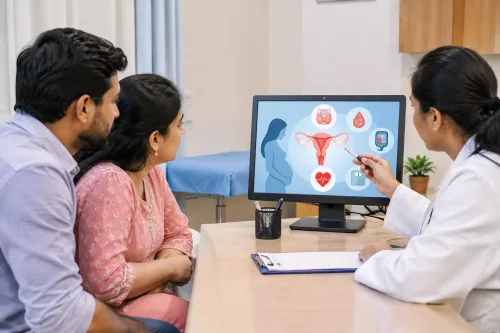
The first visit turns your history and current findings into a risk-specific plan, not a label. A pregnancy specialist in Andheri West reviews previous pregnancies, miscarriages, stillbirths, caesareans and other surgeries, along with chronic conditions, family history, medicines and allergies.
1. Bring ultrasound reports, blood-test results, discharge summaries, vaccination records, blood-group documentation, and a current medicine list with doses. Write down the dates and outcomes of every previous pregnancy.
2. Expect confirmation of gestational age from your last menstrual period, prior scans or both. The clinician measures your blood pressure and performs a physical assessment, then orders targeted blood, urine, ultrasound or cardiac tests when your history or examination warrants them.
3. Discuss treatment decisions before changing medicines. The consultation can determine whether low-dose aspirin is appropriate for preeclampsia prevention; do not self-start 81 mg daily. When prescribed, guidance commonly starts it after 12 weeks, ideally before 16 weeks, and continues it until delivery.
4. Leave with a written monitoring schedule, medication instructions, warning signs, likely delivery timing and the hospital level required if complications develop. Ask who will review test results and where to go if your condition worsens between appointments.
How is high-risk monitoring different from routine antenatal care?
Routine antenatal care follows standard visit intervals and population-level screening. High-risk monitoring buys earlier warning, better trend information and a coordinated response when a maternal or fetal problem can change quickly.
| Area | Routine antenatal care | High-risk monitoring |
|---|---|---|
| Blood pressure and urine | Checks at scheduled visits | Repeated blood-pressure checks and urine-protein testing |
| Glucose | Gestational-diabetes screening at 24–28 weeks | Early testing at the first visit for risk factors, repeated at 24–28 weeks if normal |
| Fetal assessment | Standard anatomy and growth assessment | Growth ultrasounds, umbilical-artery Doppler, non-stress tests, detailed anatomy scan or fetal echocardiography |
| Review schedule | Standard appointment intervals | More frequent reviews linked to results and symptoms |
One abdominal measurement or one ultrasound estimate cannot diagnose fetal-growth restriction reliably. After diagnosis, umbilical-artery Doppler findings, amniotic-fluid volume, growth trend and the maternal condition determine testing frequency and delivery timing.
The plan may include a diabetologist, cardiologist, nephrologist, hematologist, maternal-fetal medicine specialist or neonatologist. For West Mumbai, a high risk pregnancy specialist andheri for west search is useful only if the service coordinates these referrals rather than adding isolated appointments.
Coordination determines which tests happen together, how often you attend and whether delivery should occur near an adult intensive care unit or neonatal intensive care unit.
When is a specialist clinic or tertiary hospital worth the effort?
A nearby clinic is worth the effort only when it can match your risk and escalate care quickly. Search terms such as high risk pregnancy specialist andheri for west or high risk obstetrician andheri matter less than the pathway behind the title.
| Option | What it provides | When it applies |
|---|---|---|
| General gynecologist | Routine assessment and referral | Manageable risks without specialist surveillance |
| Standard obstetrician | Antenatal care and delivery planning | Most pregnancies and risks within local capability |
| High-risk obstetrician | Closer monitoring and coordinated referrals | Diabetes, hypertension, prior severe preeclampsia or altered surveillance |
| Hospital-based maternal-fetal medicine service | Rapid specialist input and tertiary resources | Complex maternal disease, fetal conditions or anticipated intensive care |
Ask whether the pathway gives rapid access to maternal-fetal medicine, a blood bank, operating theatre, anaesthesia, adult ICU, neonatal intensive-care unit and relevant medical or surgical specialists.
Tertiary planning deserves priority for significant heart disease, insulin-treated diabetes with complications, chronic kidney disease, prior severe preeclampsia, a serious fetal condition, monochorionic multiple pregnancy, suspected placenta accreta or a previous stillbirth that changes surveillance. A manageable risk factor can remain with a specialist clinic if referral triggers are written clearly.
Dr Neha Pawar Obstetrician,Gynecologist,Andheri may suit someone seeking local specialist assessment linked to hospital-based care; confirm who receives emergencies and where admission occurs. The decision is worthwhile when care can escalate without delay, not merely because the clinic is nearby.
Related service
High Risk Obstetrics High Risk Obstetrics Specialist in Andheri West,Mumbai Dr Neha Pawar is the Best High Risk Obstetrics/High Risk Pregnancy Specialist in Andheri West, Andheri and Mumbai. View service → |
Frequently asked questions
Which pregnancies need high-risk obstetric input?
Ask a high-risk obstetrician about care if you have conditions such as diabetes, hypertension, heart disease or kidney disease; a previous preterm birth, stillbirth or severe pre-eclampsia; a multiple pregnancy; abnormal scan findings; or pregnancy complications that could change monitoring or the birth plan.
When should I skip the appointment and seek emergency care?
Seek emergency care for heavy vaginal bleeding, severe or persistent abdominal pain, seizures, fainting, severe breathlessness, chest pain, severe headache with vision changes, leaking fluid with labour symptoms, or noticeably reduced fetal movement.
What happens at the first high-risk pregnancy consultation?
The specialist reviews your medical and obstetric history, medications, previous reports and current symptoms. They may check blood pressure, order blood or urine tests, review ultrasound findings, assess fetal growth and explain the monitoring schedule and delivery setting.
How is high-risk monitoring different from routine antenatal care?
It uses a plan matched to your risk factors, which can include more frequent visits, blood pressure or glucose checks, targeted ultrasound, fetal growth scans, Doppler studies, non-stress tests and consultations with other specialists.
When is a specialist clinic or tertiary hospital worth the effort?
Choose a specialist clinic or tertiary hospital when your pregnancy needs advanced imaging, maternal medicine, fetal medicine, complex surgery, continuous monitoring, a neonatal intensive care unit or coordinated care for a serious medical condition.