


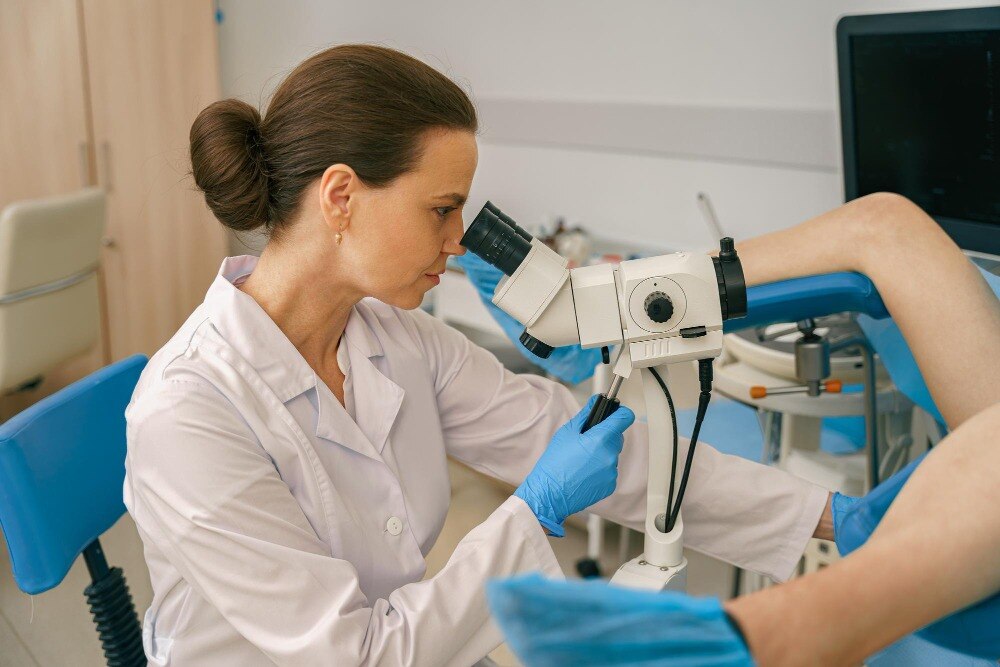
An abnormal Pap report can describe anything from an inadequate sample to cell changes that need prompt investigation, and the label alone does not determine your next appointment. By the end, you will know how to interpret the main result categories, understand when repeat testing or colposcopy is used, prepare for the examination, and arrange appropriate follow-up.
Key takeaways
- An abnormal Pap result does not diagnose cervical cancer.
- HPV positivity and abnormal cervical cells are separate findings.
- Colposcopy uses magnification and biopsy to investigate suspicious cervical areas.
- Follow-up may involve repeat testing or colposcopy based on risk.
What the wording on an abnormal Pap report actually means
An abnormal Pap smear is a screening finding, not a cancer diagnosis. It can reflect HPV-related changes, inflammation, or precancerous cells; a directed tissue biopsy is needed to confirm cervical precancer or cancer.
Report wordingMeaningDoes it indicate cancer?ASC-USAtypical squamous cells of undetermined significance; cells look slightly unusual, but the cause is unclear.No.LSILLow-grade squamous intraepithelial lesion, usually a mild HPV-related cell change.No, but follow-up is important.HSILHigh-grade squamous intraepithelial lesion, with changes more likely to represent significant precancer.No, but it needs prompt evaluation.ASC-HAtypical squamous cells where a high-grade lesion cannot be excluded.No, but colposcopy is usually needed.AGCAtypical glandular cells from the cervix or, less often, the uterine lining.No, but this finding requires careful investigation.UnsatisfactoryThe sample could not be assessed reliably because of too few cells, blood, inflammation, or another interfering substance.It is not a cancer result and is not a reassuring negative result.
For an unsatisfactory sample, repeat age-based screening as soon as practical and within four months. A negative HPV result from that inadequate sample does not fully rule out risk. The right Pap smear follow up depends on your age, HPV result, pregnancy status, previous results, and earlier treatment—not the label alone.
Abnormal cells and positive HPV are related but different findings
An abnormal cytology result means the laboratory saw cells on the Pap smear that look different from typical cervical cells. Those changes can reflect HPV-related irritation, inflammation, a temporary cell change, or a precancerous lesion. Cytology examines cell appearance; it does not identify the virus causing the change.
A positive high-risk HPV result means the sample contains a high-risk type of human papillomavirus. The cells can still look normal, because HPV infection may exist before visible cellular abnormalities develop. Conversely, abnormal cells can occur with a negative HPV result because of inflammation, sampling limits, or changes unrelated to the tested HPV types.
HPV 16 and HPV 18 receive particular attention because they carry a stronger association with cervical precancer and cancer than many other high-risk types. Finding either type can change the recommended follow-up, including whether colposcopy is advised, but it is not a cancer diagnosis.
A positive result identifies an infection, not its duration or the damage it has caused.
Neither result alone confirms cervical cancer. Cancer requires examination of tissue, usually from a colposcopy-directed biopsy, by a pathology laboratory. Your clinician interprets the cytology, HPV type, age, pregnancy status, and earlier screening or biopsy history together before choosing surveillance, colposcopy, or further treatment.
How clinicians choose repeat testing or colposcopy
The choice depends on your calculated risk, not the Pap label alone. Clinicians review your age, current HPV result and genotype, cytology wording, pregnancy status, previous screening and biopsy results, and any prior cervical treatment.
OptionWhat usually happensWhen it appliesRepeat HPV or Pap testingRepeat HPV-based testing, or co-testing, after a defined intervalLow immediate risk, such as a minor abnormality with reassuring prior resultsColposcopyExamine the cervix and take a directed biopsy when neededRisk is high enough to investigate now, including many HPV-positive results with abnormal cytologyCloser specialist managementShort-interval review, biopsy planning, treatment discussion, or oncology referralHigh-grade cytology, glandular abnormalities, persistent abnormalities, or suspected invasive disease
A positive high-risk HPV result alone does not mean cancer or automatic excision. HPV 16 or HPV 18, high-grade cytology such as HSIL or ASC-H, and persistent HPV infection raise concern and often lead to colposcopy rather than routine repeat testing.
Pregnancy changes the type and timing of care, not the importance of follow-up. Colposcopy remains appropriate when the risk warrants it, but expedited treatment is avoided during pregnancy; suspected cancer needs specialist evaluation. A biopsy showing CIN 3 generally requires treatment, while selected CIN 2 cases can be observed closely.
Ask for a documented pap smear follow up plan with a specific date, not just reassurance.
What colposcopy examines and what happens at the appointment
Colposcopy examines the cervix for HPV-related low- or high-grade changes and can inspect visible lesions on the vagina or vulva. A colposcope magnifies these tissues; it stays outside the body and does not enter the cervix. A suspicious area still requires biopsy because appearance alone cannot confirm precancer or cancer.
During the appointment, expect these steps:
- A speculum gently holds the vaginal walls apart so the clinician can see the cervix. You may feel pressure or discomfort.
- Dilute acetic acid is applied. Abnormal areas can turn white, helping the clinician decide where to look closely.
- Lugol iodine may be applied. Normal glycogen-containing tissue stains brown; areas that do not take up the iodine need assessment.
- One or more small biopsies may be taken from abnormal areas. Brief pinching or cramping and light spotting can follow.
- Endocervical curettage (ECC) collects cells from the cervical canal when the transformation zone is not fully visible or high-grade disease is suspected. The sample is sent for pathology.
ECC is not performed during pregnancy. A clinically indicated biopsy can be taken during pregnancy, but endocervical sampling and treatment without confirmed cancer are avoided. Ask a colposcopy specialist in Mumbai how pregnancy, bleeding, pain, or an unsatisfactory examination changes the plan. Tissue pathology, not the Pap result or colposcopic appearance alone, establishes the diagnosis.
What to do after an abnormal Pap smear in Andheri West
Contact a gynecologist within a few days of receiving the report; do not wait for your next routine check-up.
The practical answer to what to do after abnormal pap smear in andheri west is to arrange a review of the full result, because HPV status, age, pregnancy, previous treatment and earlier biopsy findings determine the timing of repeat testing or colposcopy.
If the report says “unsatisfactory,” arrange repeat screening promptly and no later than four months.
Bring these records to the appointment:
- The complete Pap report, including the cytology category and HPV result or genotype
- Previous Pap or HPV reports, colposcopy notes, biopsy and pathology results
- Dates and details of any cervical treatment
- Your pregnancy status, last menstrual period and current medicines
Searches for “abnormal pap smear doctor andheri west” should lead to a clinician who can provide the whole pathway, not only collect another sample.
Clinician optionCheck before bookingWhy it mattersGynecologistDocumented cervical-screening follow-upInterprets the report and sets the correct intervalColposcopy specialist in mumbaiPerforms colposcopy and directed biopsyInvestigates abnormal areas without delaying tissue diagnosisSpecialist with referral linksPregnancy management and suspected-cancer referralKeeps complex care coordinated
Dr Neha Pawar Obstetrician,Gynecologist,Andheri is one local clinician to assess against these practical criteria, including whether pathology review and onward referral are available when needed.
Related service
Pap Smear and Colposcopy
Pap Smear and Colposcopy Specialist in Andheri West,Mumbai
Dr Neha Pawar is the Best Pap Smear and Colposcopy Specialist in Andheri West, Andheri and Mumbai.
Frequently asked questions
- What does an abnormal Pap smear result mean?
- It means cervical cells look different from normal. The change can relate to HPV, inflammation, or precancerous cells, but the result alone does not diagnose cancer.
- Are abnormal cells and positive HPV the same finding?
- No. A positive HPV test identifies a virus linked to cervical cell changes, while an abnormal Pap identifies cells that look unusual. You can have one finding without the other.
- When is colposcopy recommended after an abnormal Pap smear?
- Clinicians consider your Pap wording, HPV result, previous screening history, and age. They may recommend repeat testing when risk is lower and colposcopy when the findings need closer investigation.
- What happens during a colposcopy?
- The clinician examines the cervix through a magnifying instrument after inserting a speculum. They may apply solutions to highlight abnormal areas and take a small biopsy for laboratory testing.
- What should you do after an abnormal Pap smear in Andheri West?
- Obtain the complete report, including the HPV result and exact cell description, and book follow-up with an abnormal Pap smear doctor in Andheri West. Do not skip the recommended repeat test or colposcopy.