

Irregular timing, painful cramps and heavy bleeding can occur after the first period, but certain patterns need medical assessment instead of reassurance. You will learn which symptoms can be monitored, which require an appointment or urgent care, and how to prepare for an adolescent gynecology visit.
Key takeaways
- Cycles can take two to three years to become regular after the first period.
- Seek prompt care for bleeding over seven days, soaking pads hourly, fainting, or severe pain.
- Record cycle dates, bleeding, pain, medicines, and family history before the appointment.
- A blood count, pregnancy test, thyroid test, or clotting tests may identify the cause.
Which Period Changes Are Normal After the First Period?
During the first two to three years after the first period, cycles commonly mature gradually. Most cycles fall within 21 to 45 days, bleeding lasts no more than 7 days, and flow can vary from light to heavy.
A missed period or changing flow can occur while hormones settle, but teenage period problems need evaluation when irregularity crosses these limits.
| Pattern | What it means | When to seek assessment |
|---|---|---|
| More than 90 days between periods | An unusually long gap | Arrange evaluation even once |
| Periods stop after starting | About 3 months after previously regular cycles, or 6 months after irregular cycles | Arrange evaluation |
| Periods have not started | No first period by age 15, or within 3 years of breast development | Arrange evaluation |
| Periods occur more often than every 21 days | Short cycles can cause excess blood loss | Arrange evaluation, especially with fatigue or dizziness |
| Bleeding lasts more than 7 days | Prolonged bleeding can cause iron deficiency | Arrange evaluation |
Seek urgent care for fainting, breathlessness, chest discomfort, marked weakness, pale skin, a rapid heartbeat, severe abdominal pain, or pads soaking rapidly. A pad or tampon soaked every 1 to 2 hours, double protection, leakage onto clothing or bedding, or large clots also needs prompt medical attention.
Pregnancy, low energy intake, intense exercise, thyroid disease, chronic illness, medicines and other conditions can stop periods, so do not dismiss a prolonged gap as normal development.
When Do Heavy Bleeding or Pain Need Prompt Medical Care?
Bleeding for more than 7 days, soaking a pad or tampon every 1 to 2 hours, needing double protection, leaking onto clothing or bedding, or passing large clots needs a routine medical appointment. Fatigue, dizziness and breathlessness can signal iron-deficiency anaemia, even when the bleeding does not look dramatic.
| Pattern | What it suggests | What to do |
|---|---|---|
| Cramps that improve with correctly used anti-inflammatory medicine | Ordinary menstrual pain | Track symptoms and discuss recurring pain at a routine visit |
| Pain that stops school or activities, persists despite treatment, or worsens each cycle | Endometriosis, an ovarian problem, infection or another cause | Arrange prompt adolescent gynecology assessment |
| Fainting, chest discomfort, marked weakness, pallor, rapid heartbeat, shortness of breath, rapidly soaking pads or severe abdominal pain | Possible significant blood loss or an acute pelvic problem | Seek emergency assessment now |
Easy bruising, frequent nosebleeds, prolonged bleeding after dental work or relatives with abnormal bleeding point towards a bleeding disorder. Tell the clinician about these clues rather than treating heavy periods as a family habit.
Searches for a teen period problems doctor in Mumbai should lead to a clinician who assesses anaemia and bleeding disorders and knows when pain needs further investigation. Do not wait for an outpatient appointment if emergency symptoms appear.
How Should a Teenager Prepare for the Appointment?
Bring a two- to three-month record, even if it is incomplete. Note:
- The first day of each period, bleeding days, number of pads or tampons used, leakage onto clothing or bedding, clots, and pain from 0 to 10.
- Medicines taken, doses and missed doses, plus school, sports or social activities missed because of symptoms.
- Weight changes, acne, excess facial hair, headaches, changes in eating or exercise, and any family history of heavy bleeding or a diagnosed clotting disorder.
At the consultation, the clinician will review your menstrual pattern, health history, medicines and symptoms. You can ask for private time without a parent or guardian. The clinician may ask about sexual activity, pregnancy possibility, coercion, substance use and mental health.
They should explain what remains confidential and what must be shared if there is an immediate safety risk, abuse or a legal requirement.
You control the examination through consent, and you can ask questions or pause. The clinician may examine your abdomen for tenderness or a mass. An internal examination is not automatic or appropriate at every first visit; it is reserved for specific symptoms or findings that make it clinically necessary.
A search such as girls gynecologist near me is only a starting point—choose someone experienced with adolescent care.
Which Tests Might Explain Heavy, Painful or Irregular Periods?
Teenage period problems need symptom-led testing, not an identical test panel for every teenager. A clinician starts with the bleeding pattern, pain, medications, medical history and pregnancy possibility, then chooses targeted tests.
| Test | What it can show | When it is needed |
|---|---|---|
| Complete blood count | Anaemia from blood loss, including low haemoglobin | Heavy bleeding, fatigue, dizziness, pallor or breathlessness |
| Ferritin | Depleted iron stores, even when haemoglobin is normal | Heavy or prolonged bleeding, tiredness, or suspected iron deficiency |
| Pregnancy test | Pregnancy-related bleeding or pain | Whenever pregnancy is biologically possible |
| Thyroid, clotting or hormone tests | Thyroid disease, a bleeding disorder or hormone imbalance | Selected from the history; easy bruising, nosebleeds or prolonged dental bleeding may prompt clotting evaluation, sometimes with a hematologist |
| Pelvic examination | Vaginal or cervical bleeding, discharge, tenderness or a mass | Only when symptoms or findings make it clinically necessary; it is not automatic at the first visit |
| Ultrasound | An ovarian or uterine mass, structural disease or a specific pain pattern | Persistent pain, suspected ovarian problems, a mass or poor response to initial treatment; it is not a routine first test |
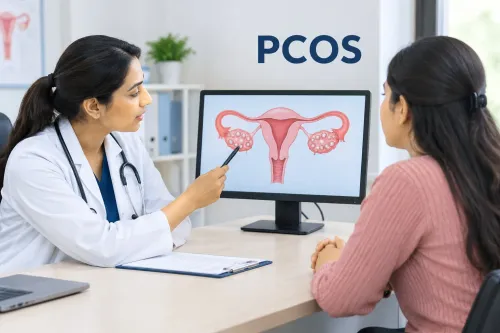
A normal ultrasound does not rule out endometriosis. Adolescent PCOS requires menstrual irregularity plus clinical or biochemical androgen excess after mimicking conditions are excluded; ultrasound alone is not diagnostic within eight years of the first period.
How Do You Choose the Right Adolescent Gynecologist in Mumbai?
Treat “adolescent gynecologist andheri for west,” “adolescent gynecologist andheri west,” “teen period problems doctor in mumbai,” and “girls gynecologist near me” as starting points, not quality credentials. Check the doctor’s adolescent caseload, consultation style and ability to investigate heavy bleeding safely.
Ask these practical questions before booking:
- Does the doctor routinely see teenagers and offer confidential, age-appropriate time without a parent?
- Will the assessment include a complete blood count and ferritin for anaemia, with clotting evaluation when easy bruising, frequent nosebleeds or prolonged dental bleeding raises concern?
- Does the doctor explain when a pelvic examination or ultrasound is unnecessary, rather than ordering either automatically?
- Is there a named emergency referral pathway for fainting, pallor, rapid heartbeat, breathlessness, severe abdominal pain or rapidly soaking pads?
| Search result | What to verify | Decision |
|---|---|---|
| Local listing | Teen-focused experience, confidentiality and test planning | Book only after confirming |
| Hospital specialist | Emergency referral and access to investigations | Useful for complex or heavy bleeding |
| Urgent-care service | Immediate stabilisation of severe symptoms | Use instead of waiting for an appointment |
Dr Neha Pawar Obstetrician,Gynecologist,Andheri at Kokilaben Dhirubhai Ambani Hospital is a local option for families seeking specialist assessment. Sudden heavy bleeding with fainting, marked weakness, shortness of breath, chest discomfort or severe pain needs emergency care first, not an outpatient appointment.
Related service
Adolescent Health Specialist Adolescent Health Specialist in Andheri West,Mumbai Dr Neha Pawar is the Best Adolescent Health Specialist in Andheri West, Andheri and Mumbai. View service → |
Frequently asked questions
Which period changes are normal after the first period?
During the first two to three years, cycles commonly mature gradually. Most cycles occur every 21 to 45 days, bleeding lasts up to seven days, and flow varies.
When does heavy menstrual bleeding need prompt medical care?
Seek prompt care when bleeding lasts over seven days, soaks a pad or tampon every hour, causes fainting or marked weakness, or includes large clots and breathlessness.
When should a teenager see a doctor for period pain?
Arrange an evaluation when pain prevents school or normal activities, does not improve with appropriate pain relief, worsens over time, or occurs with vomiting or fainting.
How should a teenager prepare for an adolescent gynecologist appointment?
Bring cycle dates, bleeding duration, pad or tampon use, pain severity, symptoms, medicines, medical history, and family history of heavy bleeding.
Which tests might explain heavy, painful, or irregular periods?
Depending on symptoms, a clinician may order a complete blood count, ferritin, pregnancy test, thyroid testing, hormone tests, or blood-clotting tests.