

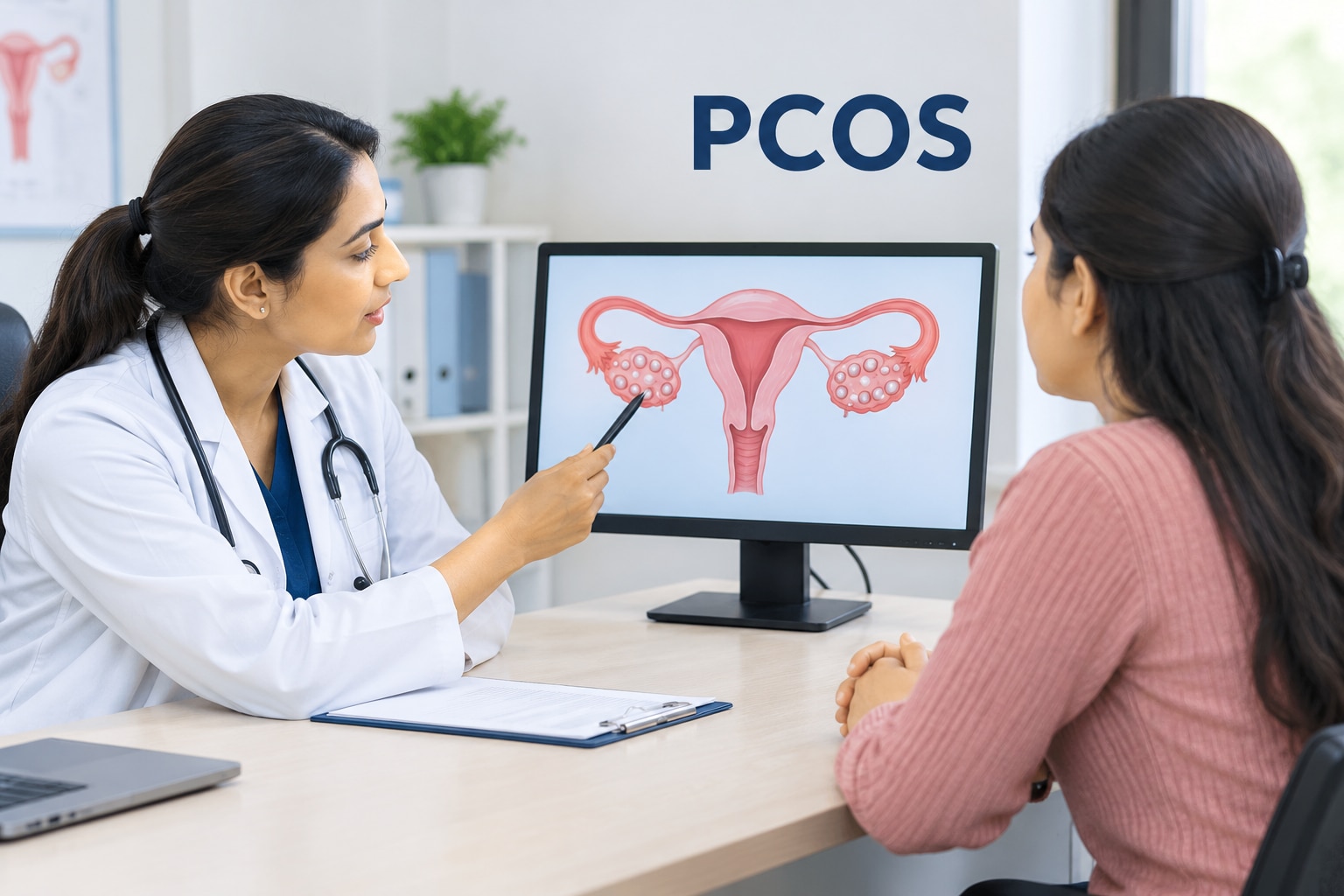
A useful PCOS evaluation does more than order an ultrasound or check one hormone. It connects your period pattern, physical symptoms, blood pressure, metabolic health, fertility goals and possible alternative diagnoses so you know which findings need treatment or follow-up.
Key takeaways
- PCOS screening combines menstrual history, symptoms, examination and targeted tests.
- Blood tests check hormones, thyroid function, prolactin, glucose and cholesterol.
- Clinicians exclude thyroid disease and other PCOS look-alikes before confirming the diagnosis.
- Screening can uncover diabetes risk, high cholesterol and endometrial health concerns.
What happens during a PCOS screening visit?
An initial PCOS evaluation identifies patterns; it does not rely on one “PCOS test.” A search for pcos screening andheri west should lead to a visit covering menstrual history, symptoms, examination and targeted investigations, not an ultrasound alone.
The clinician will ask about:
- Cycle length, missed periods, bleeding changes and the date of your last period
- Acne, increased facial or body hair, scalp hair thinning and weight changes
- Pregnancy plans, previous pregnancies, fertility concerns and current medicines
- Family history of PCOS, diabetes, thyroid disease and cardiovascular risk
- Mood, anxiety, sleep and symptoms such as snoring or daytime tiredness
The examination may record blood pressure, body mass index and waist measurement, then look for facial or body hair growth, acne, scalp hair loss, dark velvety skin linked with insulin resistance, and other signs of androgen excess. A normal BMI does not exclude PCOS, and higher weight alone does not establish it.
The visit may identify irregular or absent ovulation, clinical androgen excess, metabolic risk or another explanation for your symptoms. The clinician may order selected tests for hormone levels, thyroid or prolactin disorders, pregnancy, glucose control and cholesterol.
In adolescents, normal puberty can resemble PCOS, so persistent symptoms and age at first menstruation matter before interpreting the findings.
Which blood tests investigate PCOS and its look-alikes?
A search for pcos test near me does not identify a standardised panel. There is no single PCOS blood test; clinicians choose tests to measure androgen excess, check ovulation, assess metabolic risk and exclude look-alike conditions.
| Test group | Common tests | What the results investigate |
|---|---|---|
| Androgen excess | Total testosterone; free testosterone or calculated free androgen index; SHBG; DHEAS; androstenedione | Biochemical hyperandrogenism and possible adrenal involvement |
| Ovulation and mimics | Pregnancy test; TSH; prolactin; early-morning 17-hydroxyprogesterone; timed progesterone | Pregnancy, thyroid disease, hyperprolactinaemia, non-classic congenital adrenal hyperplasia and whether ovulation occurred |
| Metabolic risk | 75-g oral glucose-tolerance test; fasting glucose or HbA1c; lipid profile | Prediabetes, diabetes, triglycerides, LDL cholesterol and HDL cholesterol |
| Other menstrual causes | FSH, LH and estradiol when indicated | Hypothalamic amenorrhoea or ovarian insufficiency, especially with low weight, intense exercise or prolonged stress |
The 75-g oral glucose-tolerance test is the most accurate glucose assessment, including for people without obesity. Use fasting glucose or HbA1c when an OGTT is impractical, then repeat testing according to individual risk.
Hormonal contraception can alter androgen results, so do not stop it solely for testing without medical advice. Rapid virilisation or markedly high testosterone or DHEAS needs prompt evaluation for an androgen-producing ovarian or adrenal tumour rather than routine PCOS alone.
How do clinicians confirm PCOS when ultrasound is not enough?
Ultrasound is only one possible Rotterdam feature; clinicians confirm PCOS by combining menstrual history, symptoms, examination and targeted tests, then excluding conditions that mimic it. In adults, diagnosis generally requires two of these three findings:
- Clinical or biochemical hyperandrogenism, such as excess facial hair, acne or raised androgen levels.
- Ovulatory dysfunction, shown by persistently irregular or absent periods.
- Polycystic ovarian morphology on a suitable pelvic ultrasound.
Menstrual patterns must be judged against age and time since menarche, not a fixed 28-day cycle. In adults, cycles shorter than 21 days, longer than 35 days, fewer than eight cycles a year, or any interval longer than 90 days indicate irregular ovulation.
Regular periods do not completely exclude PCOS, so clinicians also consider androgen symptoms and test results.
Adolescents need a stricter approach because puberty can produce irregular bleeding, acne and polycystic-looking ovaries. A diagnosis generally requires both persistent ovulatory dysfunction and clinical or biochemical hyperandrogenism after other causes are excluded.
Pelvic ultrasound and anti-Müllerian hormone are not recommended for diagnosis during the early post-menarche years; international guidance advises avoiding ultrasound-based diagnosis within eight years after menarche. If an adolescent has only one feature, the clinician can monitor symptoms and reassess rather than applying a premature label.
What health risks can screening uncover beyond irregular periods?
A PCOS assessment can uncover metabolic and reproductive risks that do not show up in your cycle history. Glucose testing can identify prediabetes or diabetes; a 75-g oral glucose-tolerance test is the most accurate option, with repeat assessment every one to three years based on risk.
A lipid profile can reveal raised LDL cholesterol or triglycerides, while blood-pressure measurement identifies hypertension.
It can also identify:
- Endometrial risk: months without ovulation leave the uterine lining exposed to oestrogen, increasing the risk of endometrial hyperplasia. Your clinician can discuss cycle regulation, a progestogen course or another method of endometrial protection.
- Fertility needs: irregular ovulation may explain difficulty conceiving and helps determine whether ovulation-focused treatment is appropriate.
- Pregnancy risks: before conception, review glucose, blood pressure, weight, medicines and folate needs. PCOS is linked with higher risks of gestational diabetes and hypertensive disorders; metformin is not a routine treatment for every PCOS pregnancy.
- Mental health concerns: guidelines recommend depression screening in adolescents and adults with PCOS, with anxiety assessment when indicated. A positive screen needs clinical follow-up, not only lifestyle advice.
- Sleep problems: loud snoring, unrefreshing sleep, daytime sleepiness or persistent fatigue can suggest obstructive sleep apnoea, even without obesity.
Searches for pcos counselling andheri west should lead to an assessment covering these risks, not just an ultrasound or hormone result. Addressing them early can change contraception, fertility planning, pregnancy monitoring and long-term preventive care.
How should you choose and prepare for a PCOS consultation?
Choose a clinician who assesses the whole picture, not a clinic offering an ultrasound alone. “PCOS specialist in Mumbai” is a search term, not a standard credential; look for a gynaecologist or endocrinologist who reviews periods, androgen symptoms, metabolic risk, mental health, fertility plans and alternative diagnoses.
| Clinician focus | What to look for | When it matters |
|---|---|---|
| Gynaecologist | Menstrual history, examination, pregnancy planning and pelvic causes | Irregular periods, acne, excess hair or fertility concerns |
| Endocrinologist | Androgen interpretation, glucose, cholesterol and thyroid or adrenal causes | Complex blood results, diabetes risk or rapid symptom changes |
| Combined care | Clear plan for follow-up and referral | Symptoms do not fit one explanation |
Bring these details to an appointment in Andheri West or elsewhere in Mumbai:
- Dates and lengths of your last 6–12 periods, including skipped months and bleeding duration
- A medication and supplement list, including contraceptive pills, metformin and steroids; do not stop anything before asking
- When acne, facial hair, scalp hair loss or weight changes began, with photographs if symptoms fluctuate
- Previous total or free testosterone, DHEAS, TSH, prolactin, glucose, HbA1c, lipid results and ultrasound reports
- Pregnancy intentions, contraception needs, sleep symptoms, mood concerns and relevant family history
Ask whether you need fasting for planned blood tests; do not assume every test requires it. At Dr Neha Pawar Obstetrician,Gynecologist,Andheri, confirm that the visit includes history, examination and targeted testing rather than ultrasound alone.
Related service
PCOS Screening and Counselling PCOS Screening and Counselling Specialist in Andheri West,Mumbai Dr Neha Pawar is the Best PCOS Screening and Counselling Specialist in Andheri West, Andheri and Mumbai. View service → |
Frequently asked questions
What happens during a PCOS screening visit?
A clinician reviews your menstrual pattern, symptoms, medical history, medicines and pregnancy plans, then performs an examination and orders targeted tests.
Which blood tests investigate PCOS and its look-alikes?
Testing can include androgen levels, thyroid-stimulating hormone, prolactin, glucose or HbA1c, lipid levels and other tests chosen from your symptoms.
How do clinicians confirm PCOS when ultrasound is not enough?
They assess the accepted diagnostic features: irregular ovulation, clinical or biochemical androgen excess, and polycystic ovarian morphology, while excluding other causes.
What health risks can screening uncover beyond irregular periods?
Screening can identify insulin resistance, prediabetes or diabetes, abnormal cholesterol, high blood pressure and risks linked to prolonged gaps between periods.
How should you choose and prepare for a PCOS consultation?
Bring your cycle dates, symptom timeline, medication list, previous reports and family history. Ask whether you need fasting blood tests or to pause any medication.